|
|
|
During the Helvetic
republic around 1800, the municipal and cantonal sovereignty for
weights and measures was significantly influenced by France and Prof J. G.
Tralles. It was only 30 years
later that 12 cantons entered a voluntary concordat
.
|
|

|
|
Jurisdiction at a
Federal level was not established until 1848 with the founding of
the Federal States, yet lacking competent authority and means of
regulating the weights and measures system. In 1862, the
weights and measures inspectorate (Prof. H. Wild) and the founding of the
Swiss Federal Verification Office brought significant
improvements
.
|
|
|
|
The constitutional
Article on Weights and Measures, still valid today, was followed by an
implementation law in 1874 and by the Metre Convention in
1875. As a founding member of the Metric Convention,
Switzerland received the new original measures, a meter stick made of
platinum-iridium, and a kilogram of platinum in 1889.
Essential improvements
requested by industry were not realized until 1906 after
an expert commission completed its work
.
|
|
|
|
With the amendment of
the Federal Law of Weights and Measures in 1909 followed the
transformation of the Swiss Federal Verification Office into the Swiss
Federal Office of Weights and Measures (AMG). Just
five years later it moved
into its own premises on the Wildstrasse in Bern. Until 1950, the
AMG with its staff of twelve carried out a multitude of verification and
examination assignments but hardly any fundamental metrology
functions
.
|
|
 |
|
In 1955,
Switzerland joined the Organisation Internationale de Métrologie Légale
(OIML), whose aim it is to harmonise the legal specifications of
applicable measuring instruments
.
|
|
|
|
In 1954/58, the
revision of the Weights and Measures Law resulted in a widening of the
scope of assignments. An examination had shown
that, by 1967, the personnel and space requirements had quadrupled to 54
persons within less than 17 years which resulted in the transfer of the
offices into a new complex of buildings in the Bern suburb of
Wabern
.
|
|
|
|
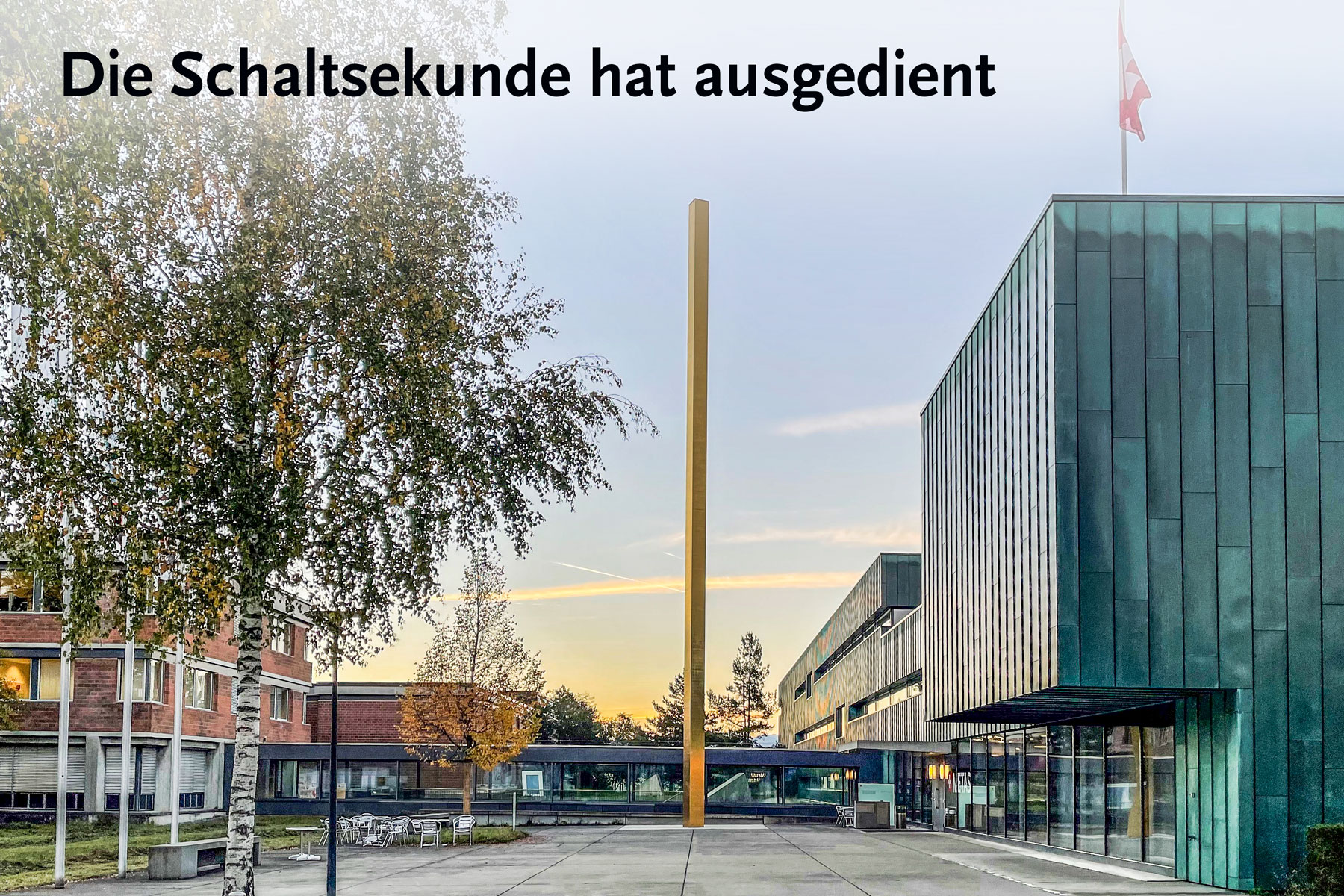
In April 1966, a
giant Russian helicopter raised the five-ton girder onto the tower of the
new structure in Wabern
. |
|
|
|
Due to the enactment
of the Federal Law on Weights and Measures in 1977, the
AMG gave way to the Swiss Federal Office of Metrology (OFMET) whose
responsibilities were expanded significantly. The development of
metrology fundamentals which followed, combined with the rapid development
in all measurement equipment fields, resulted in significant and readily
apparent changes. The founding of
the Swiss Calibration Service in 1986 and the Swiss
Accreditation Service in 1991 as well as more intensive
European cooperation contributed to this, too. There were also changes
for the cantonal verification officers; a new training concept and a
federally recognized higher education programme were
developed
.
|
|
|
|
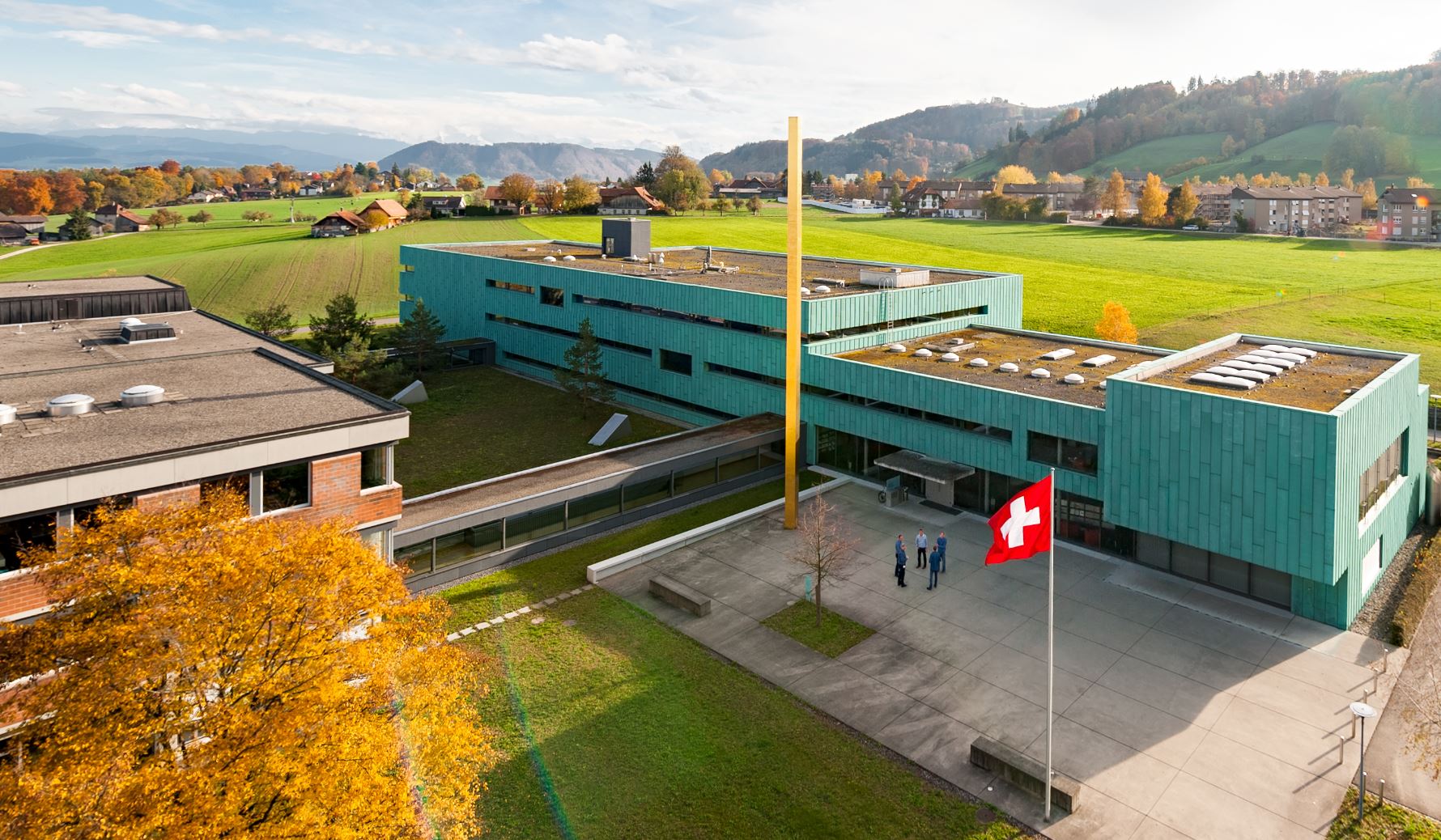
An eight-year planning,
project, and construction phase was successfully concluded in May
2001 with the opening of an extension. The new buildings
increase the usable area of the existing buildings from the sixties by
more than half, to 15 000 m2. The costs amount to 54.4 million
Francs
. |